Mark of Origin "Historical Identity" by Iyanuoluwa Babalola
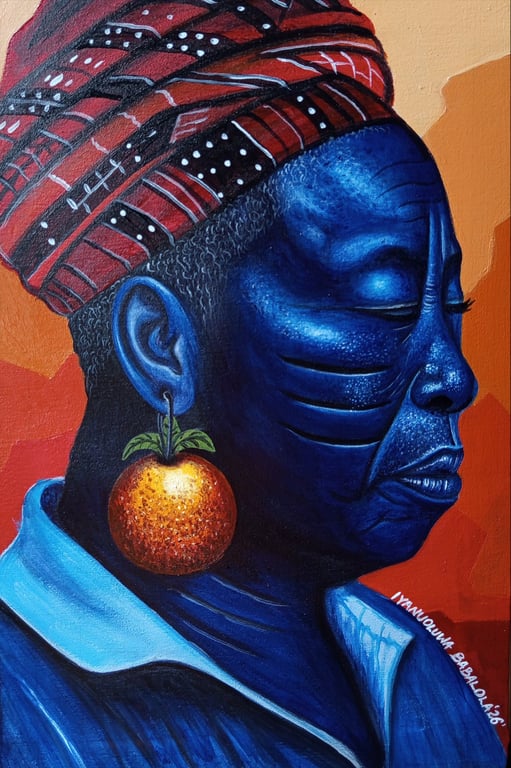
Medium: Acrylic on Canvas
Dimensions: 12 x 18 in
Year: 2026
Price: $350.00 USD
Status: available
The series is a personal exploration of the Abàjà tribal mark, which is one of the well-known identity marks in Fiditi and Oyo town. In my own family, my grandmother was the last woman to carry these marks. Because of modernization and changing beliefs, the practice gradually stopped before my parents’ generation, so neither my parents, my siblings, nor I bear them today. If tradition had continued, Abàjà marks are the identity we would naturally have carried on our cheeks, Abàjà marks as carriers of history, identity, and belonging. Created through a hyperrealistic approach, the portrait emphasizes texture, aging skin, and quiet expression to communicate lived experience rather than mere likeness. The side-profile composition was intentionally chosen to create stillness and dignity, allowing the marks to speak as visual testimonies of ancestry. The orange earring, inspired by Fiditi’s identity as the “Home of Fruits,” functions as a symbolic anchor, connecting the subject to place, memory, and cultural origin. Historically, Abàjà marks served as a visual identity system a cultural signature that revealed a person’s town, lineage, and ancestry within the Oyo Empire and the Fiditi community. In a time before written records or identification documents, the face itself carried history. These marks were not wounds but inscriptions of belonging, embodying pride, continuity, and rootedness within Yoruba civilization. The inclusion of the orange further symbolizes fertility, abundance, and the richness of heritage tied to the land. Beyond cultural documentation, the work invites viewers into a personal reflection on identity and origin. Though modern societies may no longer inscribe identity onto the skin, everyone carries invisible marks shaped by history, family, and memory. The calm, introspective posture creates a moment of recognition, encouraging viewers to consider their own connections to place and ancestry. In this way, the portrait becomes a bridge between past and present a reminder that while traditions evolve, the search for belonging remains universal.
About the Artist
Iyanuoluwa Babalola
Nationality: Nigerian
My art explores healing, identity, cultural memory, and moral consciousness through expressive painting and visual storytelling.