Meet 19 pioneering and contemporary Emirati artists whose work transformed the UAE from a young federation into a global centre for visual culture.
From vernacular craft to a global art ecosystem
Emirati art did not begin with the arrival of museums or art fairs. Its foundations lie in architectural craft, calligraphy, oral poetry and performance—the forms through which communities recorded place, belief and belonging before the federation was established in 1971.
Formal infrastructure changed the scale of that practice. The Emirates Fine Arts Society was founded in Sharjah in 1980, followed by the Abu Dhabi Cultural Foundation in 1981. Artists gained places to study, exhibit and argue. By the end of the decade, a conceptual movement had turned workshops, coastlines and industrial waste into a new field of experimentation.
Today the UAE connects local studios to the Sharjah Biennial, Art Dubai, Saadiyat Cultural District and repeated national presentations in Venice. The 19 practitioners below show that this history is not a single line of progress, but a continuing exchange between landscape, material, memory and the pressures of modern life.
I · Foundations · 1951—1956
The modern pioneers
The first generation built a visual language for a newly formed nation. Their work moved between local architecture, Gulf folklore, calligraphy, natural material and the formal vocabularies they encountered abroad.
Abdul Qader Al Rais
Born 1951 · Dubai · Painting · Watercolour · Calligraphy
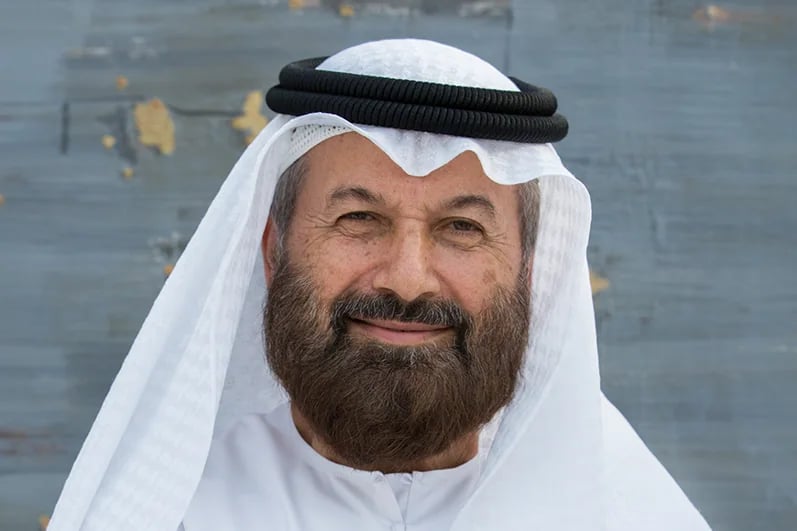 Portrait courtesy National Pavilion UAE
A self-taught modernist whose five-decade practice began with close studies of coral-stone houses, wind towers and carved doors. His later canvases dissolve those architectural memories into fields of light, calligraphic gestures and floating geometric squares.
Al Rais helped define the visual identity of the UAE’s post-Union era and became one of the country’s most internationally traded modern painters.
Market position: established blue-chip Emirati modernism, with regular appearances at major international auction houses.
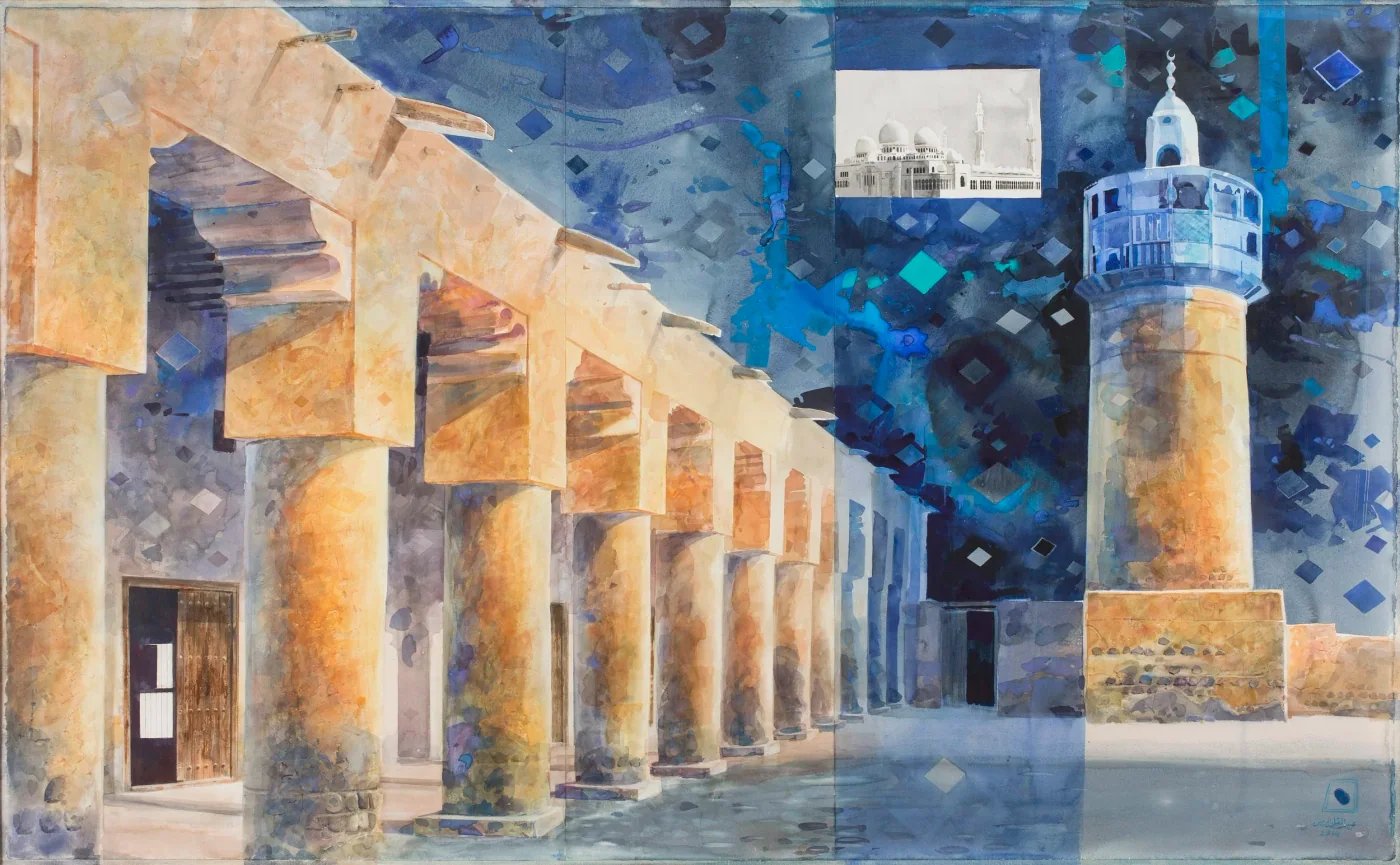 Wala'in Shakartom l'azeednakom, 2016 · Courtesy Dubai Culture
Dr. Mohamed Yousif
Born 1953 · Sharjah · Sculpture · Installation · Theatre
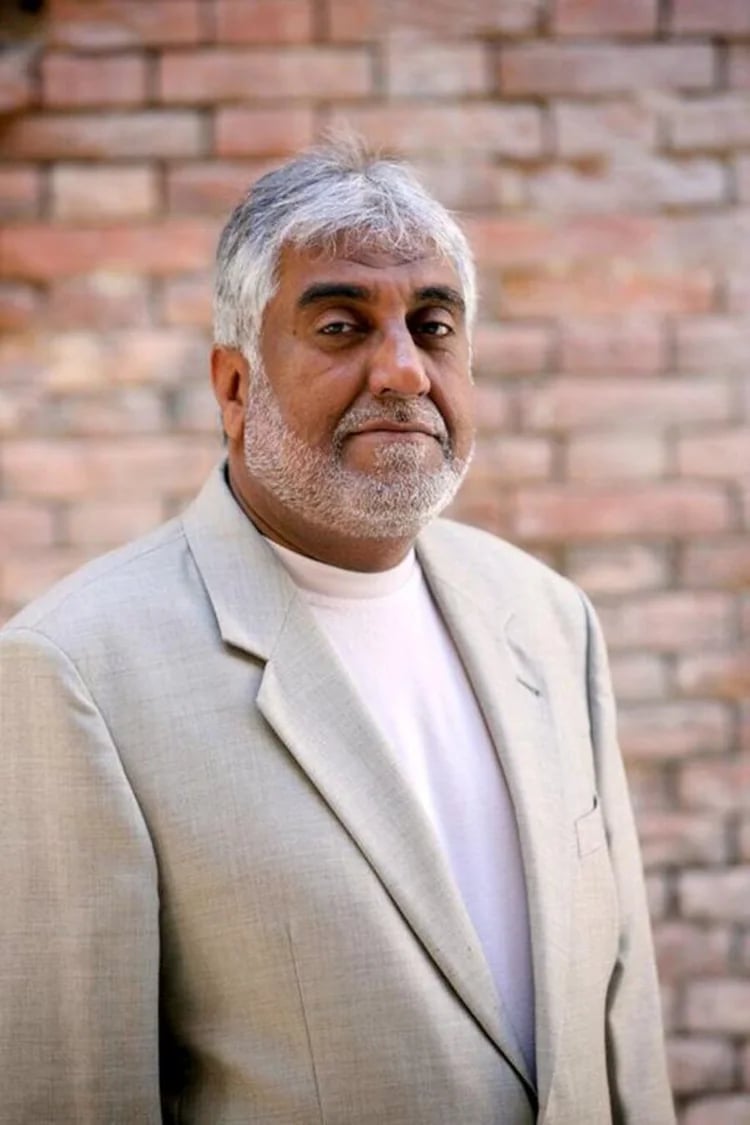 Portrait courtesy National Pavilion UAE
A sculptor, educator and theatrical designer whose tactile constructions use palm fronds, desert wood and discarded metal to hold motion and stillness in balance. His work treats the natural environment not as scenery, but as an active material partner.
Yousif helped establish the Emirates Fine Arts Society, co-founded Sharjah National Theatre and represented the UAE at the Venice Biennale.
Market position: institution-led, with value shaped by scale, material complexity and the scarcity of major environmental works.
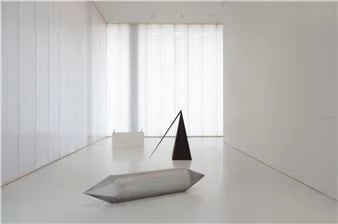 Installation view · Aranya Art Center
Abdulraheem Salim
Born 1955 · Dubai · Sharjah · Painting · Sculpture
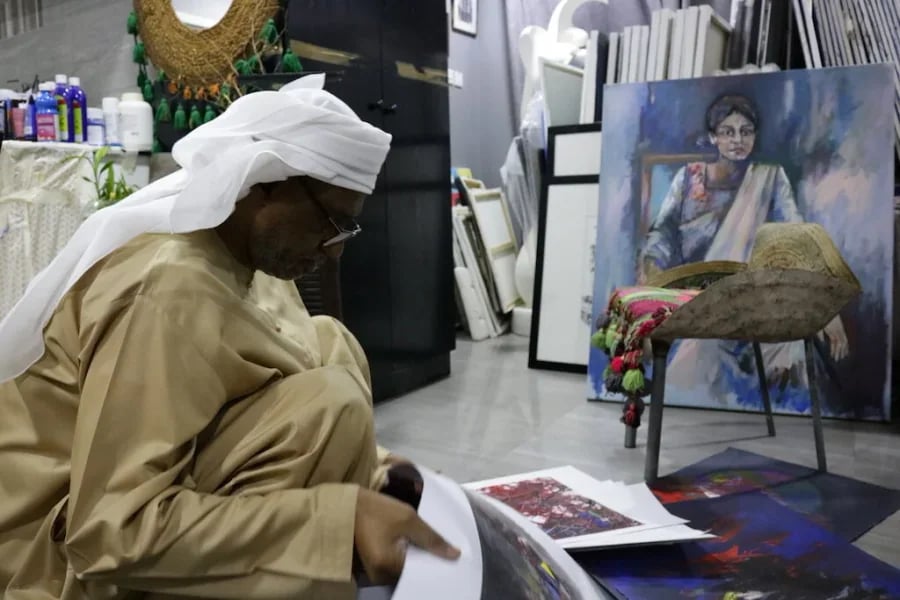 Studio portrait · Suzy Sikorski
Salim moves between figuration and expressionist abstraction, returning repeatedly to Gulf folklore, spiritual identity and the unstable boundary between presence and absence. His Mahmeesh figure became an enduring vessel for inner struggle.
A first-generation formally trained artist, Salim won the inaugural Sharjah Biennial’s First Prize in 1993 and received the UAE State Honor Award for Fine Arts in 2008.
Market position: a foundational modernist with sustained regional gallery and secondary-market demand.
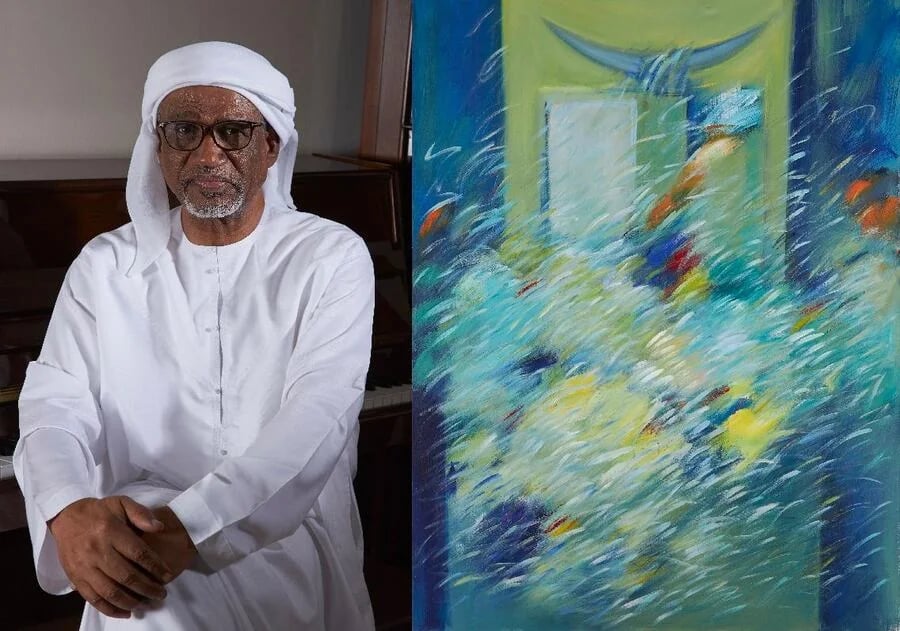 Conversations with the Moon · Courtesy the artist and Cultural Foundation
Dr. Najat Makki
Born 1956 · Dubai · Painting · Sculpture · Natural pigment
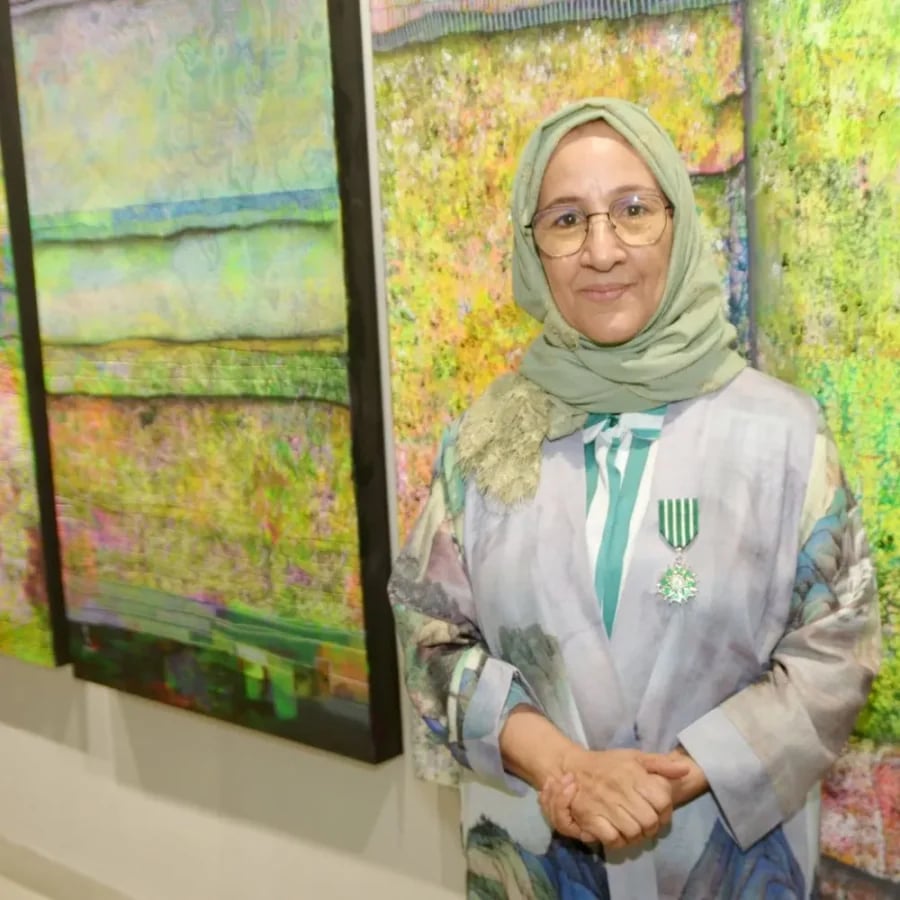 Portrait courtesy Aisha Alabbar Gallery
The first Emirati woman to receive a state scholarship for art study abroad, Makki developed an abstract language from saffron, henna, indigo, bark and acrylic colour. Her surfaces connect the rhythms of landscape with memory and female experience.
Her work placed women at the centre of Gulf modernism and brought Emirati abstraction into major international exhibitions and collections.
Market position: an increasingly recognised Gulf modernist, with strongest demand for historic and materially experimental canvases.
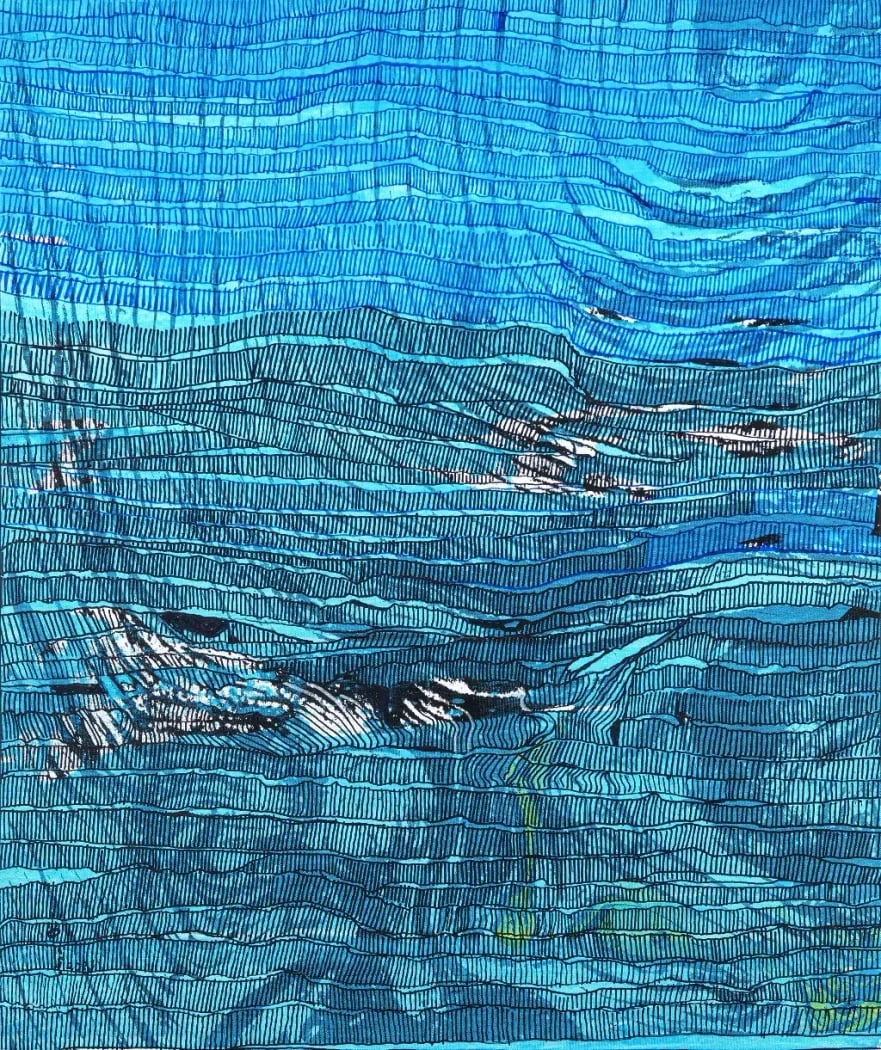 The Scent of Memories, 2023 · Courtesy Aisha Alabbar Gallery
II · The conceptual turn · 1980s—1990s
The Five and a new visual grammar
In workshops, borrowed rooms and the landscape outside the city, five artists rejected the expectation that Emirati art should look picturesque. Performance, repetition, land art, found objects and industrial waste became a new grammar.
Hassan Sharif
1951—2016 · Dubai · Conceptual art · Performance · Assemblage
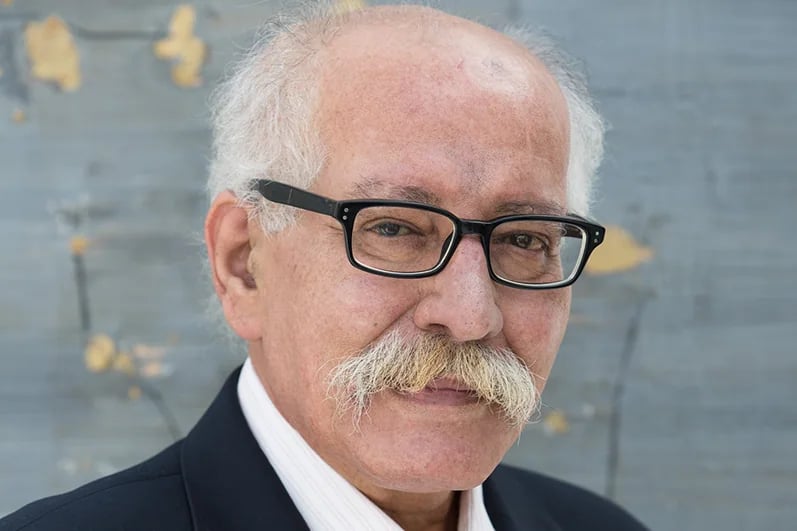 Portrait courtesy National Pavilion UAE
Sharif treated ordinary materials as systems. Plastic rope, copper wire, cardboard, spoons and discarded shoes were counted, tied, accumulated and transformed into unruly sculptural bodies. His Satwa studio became a school without a curriculum.
Widely regarded as the central pioneer of conceptual art in the Gulf, Sharif’s work entered the collections of Tate, Centre Pompidou, Guggenheim Abu Dhabi and Sharjah Art Foundation.
Market position: the international benchmark for UAE conceptual art, with both museum demand and a developed auction record.
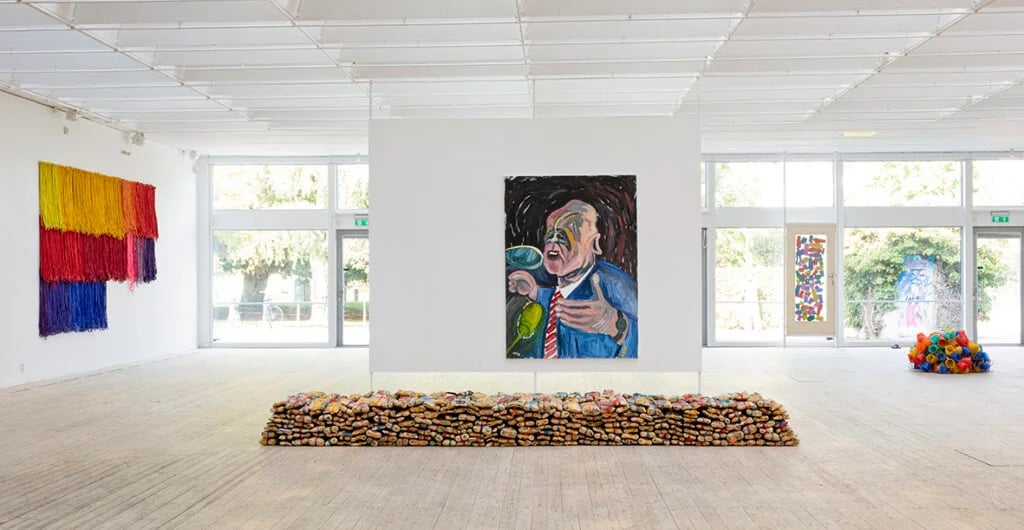 I Am the Single Work Artist · Installation view, Malmö Konsthall
Hussain Sharif
Born 1961 · Dubai · Installation · Sculpture · Drawing
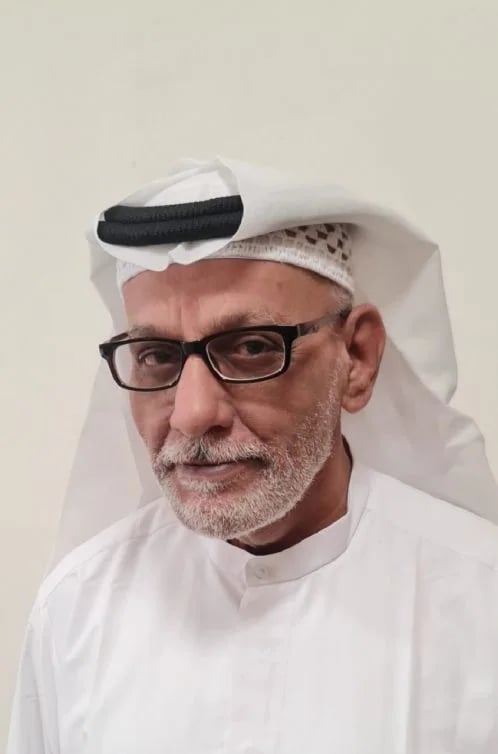 Portrait · Courtesy the Hussain Sharif Collection, Arab Art Archive, al Mawrid, NYU Abu Dhabi
An artist and self-described art activist, Hussain Sharif turns cement, sheet metal, wire, cardboard and paper fragments into ordered fields. Repetition gives urban waste a temporary discipline while exposing the pressure of mass consumption.
A co-founder of the Emirates Fine Arts Society and a core member of The Five, he helped sustain the UAE’s experimental community through workshops and mentorship.
Market position: historically important and comparatively under-traded, with institutional archives now clarifying the depth of his practice.
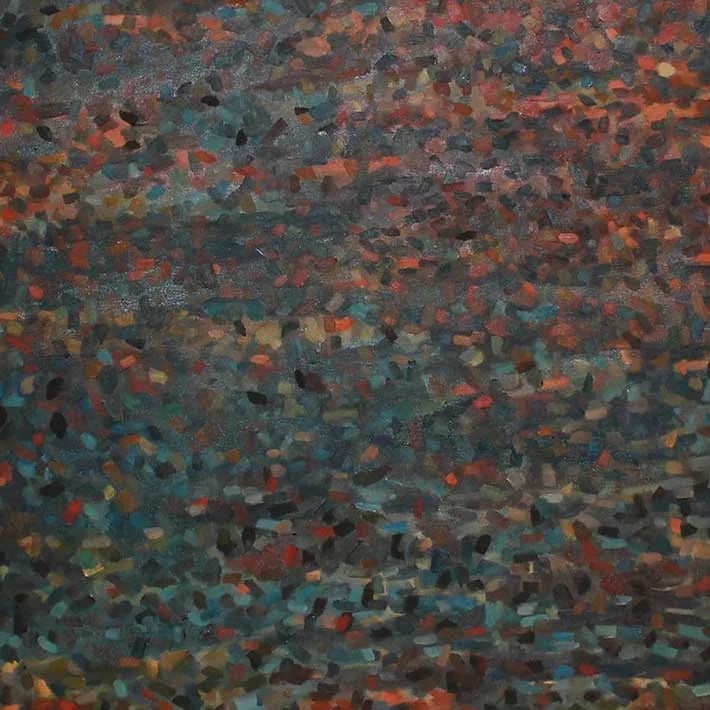 Untitled · Barjeel Art Foundation collection
Mohamed Ahmed Ibrahim
Born 1962 · Khor Fakkan · Land art · Sculpture · Painting
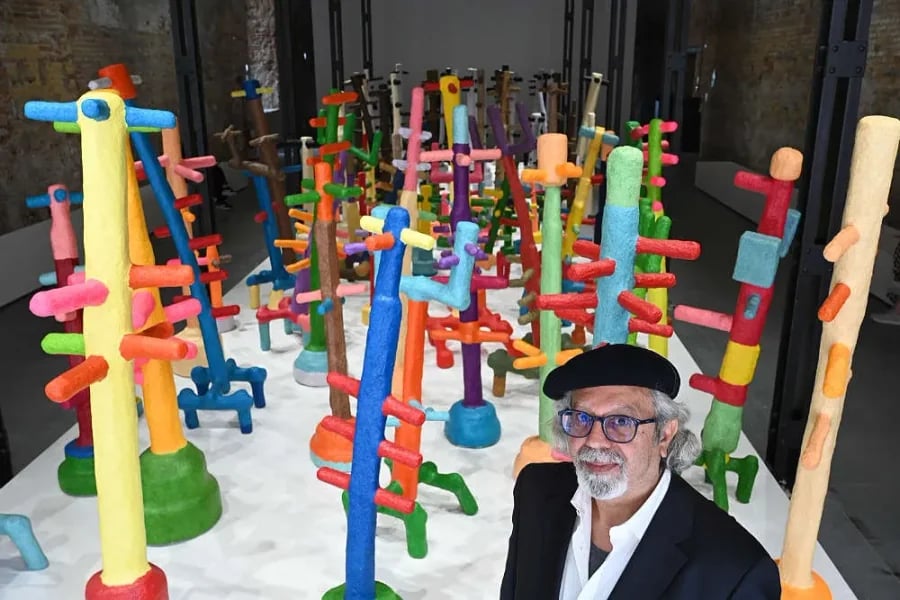 Portrait courtesy Lawrie Shabibi and National Pavilion UAE
The Hajar Mountains and Gulf of Oman shape Ibrahim’s visual world. Clay, stones, organic pigments and papier-mâché meet black-and-white marks that recall cave notation and the practical symbols once drawn on rural doorways.
His solo presentation at the 2022 Venice Biennale transformed the UAE Pavilion into a vivid passage of 128 biomorphic sculptures.
Market position: strong international institutional momentum, supported by an active primary market and growing demand for works across media.
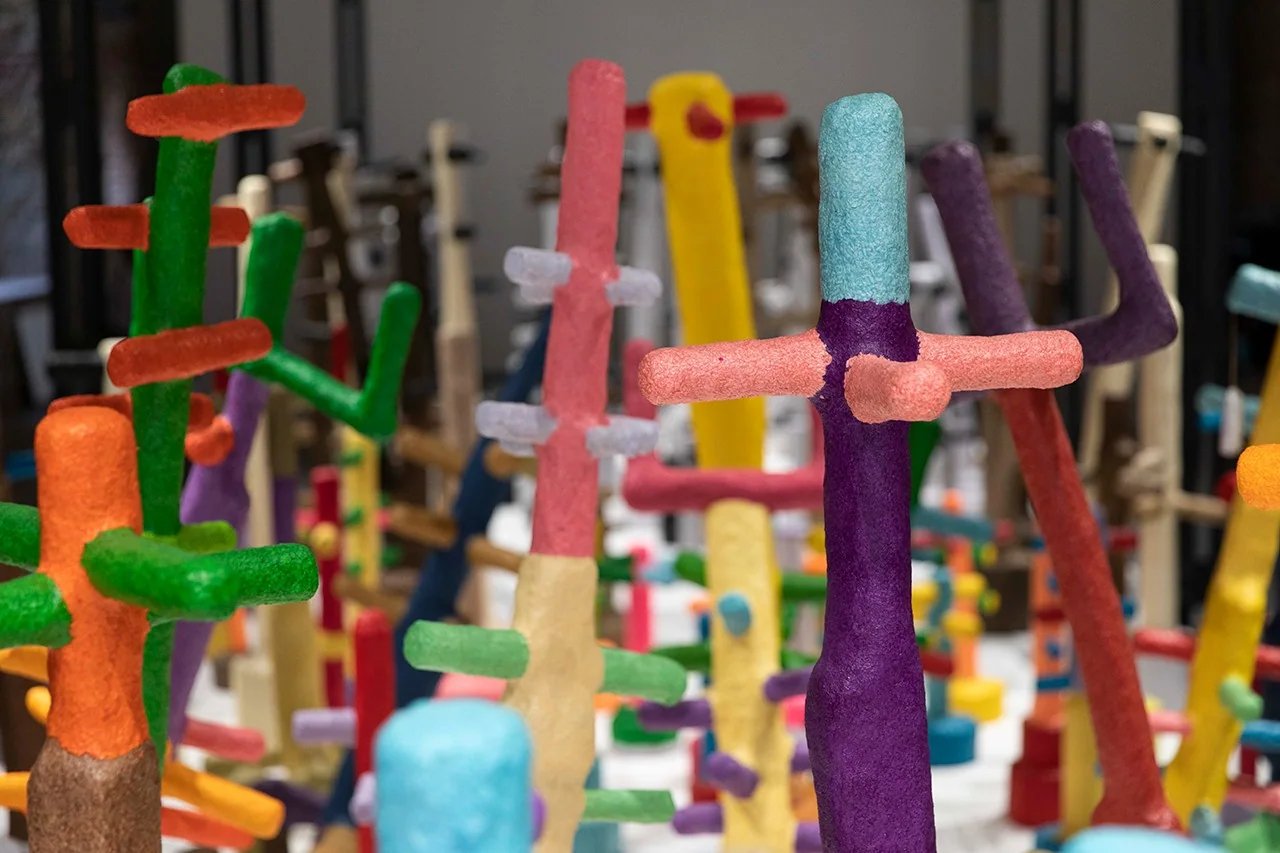 Between Sunrise and Sunset, 2022 · Photo Ismail Noor / National Pavilion UAE
Abdullah Al Saadi
Born 1967 · Khor Fakkan · Land art · Drawing · Archival installation
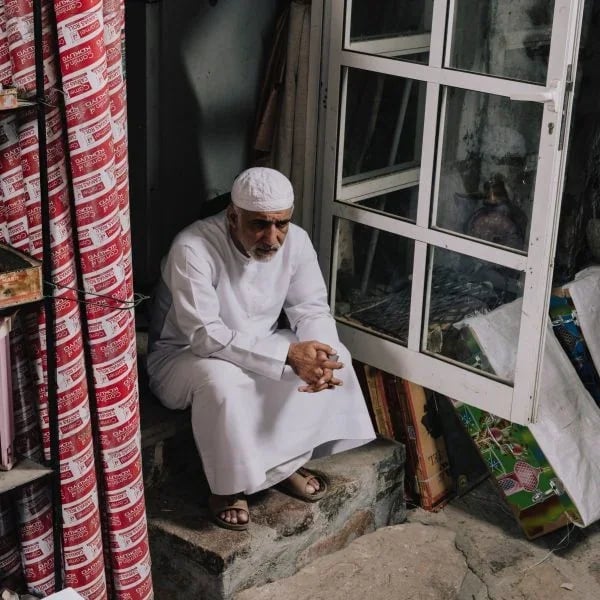 Portrait · Danko Stjepanovic, courtesy the artist
Al Saadi walks, records and classifies. Stones, dried plants, insects, drawings and his mother’s letters are preserved in hand-made tins and boxes, turning journeys through rural landscapes into intimate systems of memory.
Selected as the UAE’s solo artist for the 2024 Venice Biennale, he made a lifetime of private archives legible as a national cultural language.
Market position: institutionally anchored; value concentrates in complete scrolls, journeys and carefully preserved classification sets.
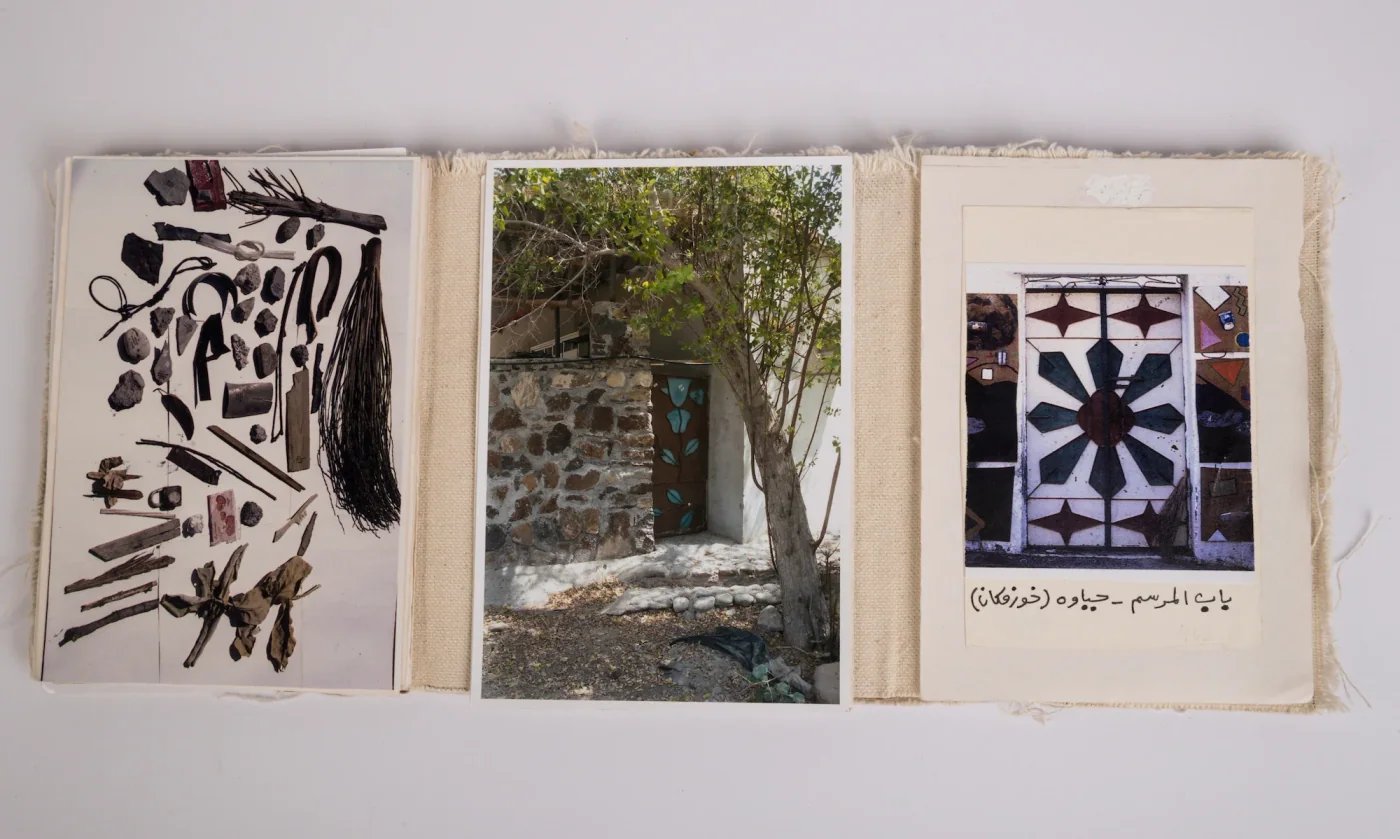 My Mother’s Letters, 2018 · Courtesy the artist and Abu Dhabi Art
Mohammed Kazem
Born 1969 · Dubai · Video · Photography · Performance · Installation
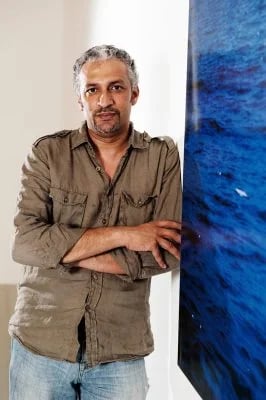 Portrait · Sofia Dadourian, courtesy the artist
Kazem records what cannot easily be held: geographic coordinates at sea, sound translated into gouged paper, and labour registered through repeated physical action. Technology becomes a tool for locating the body rather than escaping it.
Mentored by Hassan Sharif from his teens, Kazem represented the UAE at the 2013 Venice Biennale and established one of the country’s most sustained multimedia practices.
Market position: internationally collected, with demand spanning scratched-paper works, photographic editions and landmark Directions installations.
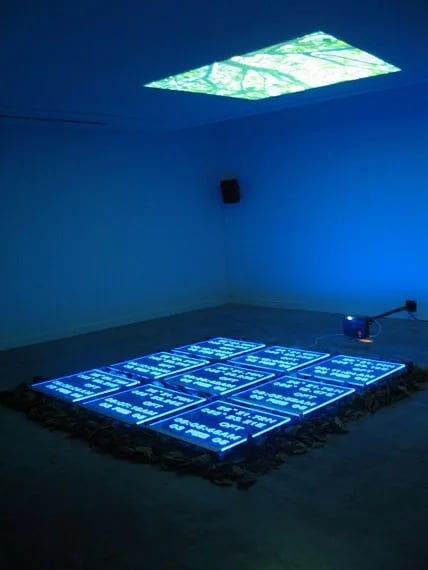 Directions, 2005 · Courtesy the artist
III · Contemporary voices · 1981—1998
Material, image and a changing Gulf
A younger generation works within a far denser cultural ecosystem, but the questions remain local and precise: what rapid urbanisation leaves behind, how landscape carries memory, and how private life is staged within public images.
Ammar Al Attar
Born 1981 · Dubai · Photography · Archival research
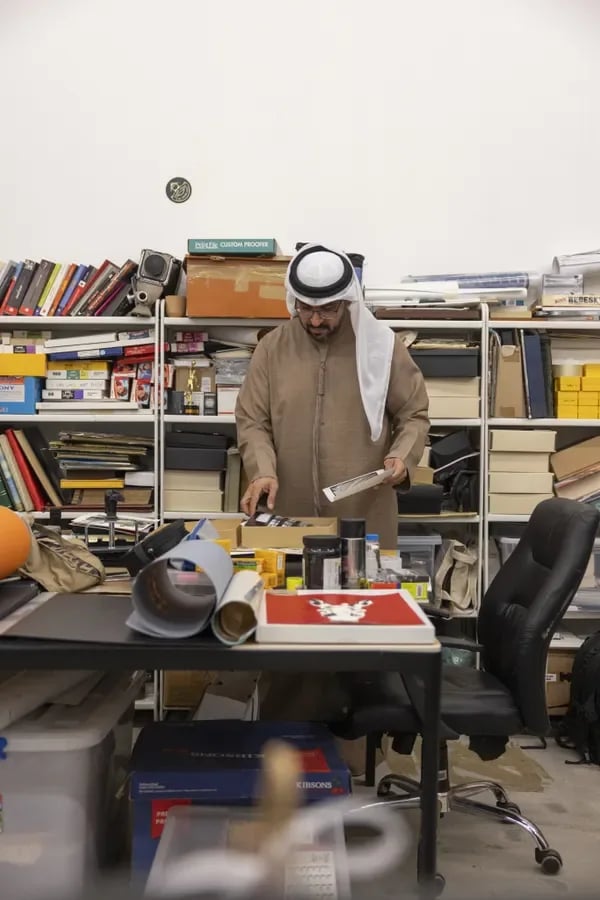 Studio portrait courtesy Iris Projects
Al Attar photographs social rituals, vernacular studios and changing streets with the patience of an archivist. His images preserve forms of collective life that are easily overlooked during rapid urban transformation.
His practice expanded the role of photography in Emirati art from documentation to active cultural memory.
Market position: edition-led, with demand connected to institutional exhibitions and the historical specificity of each body of work.
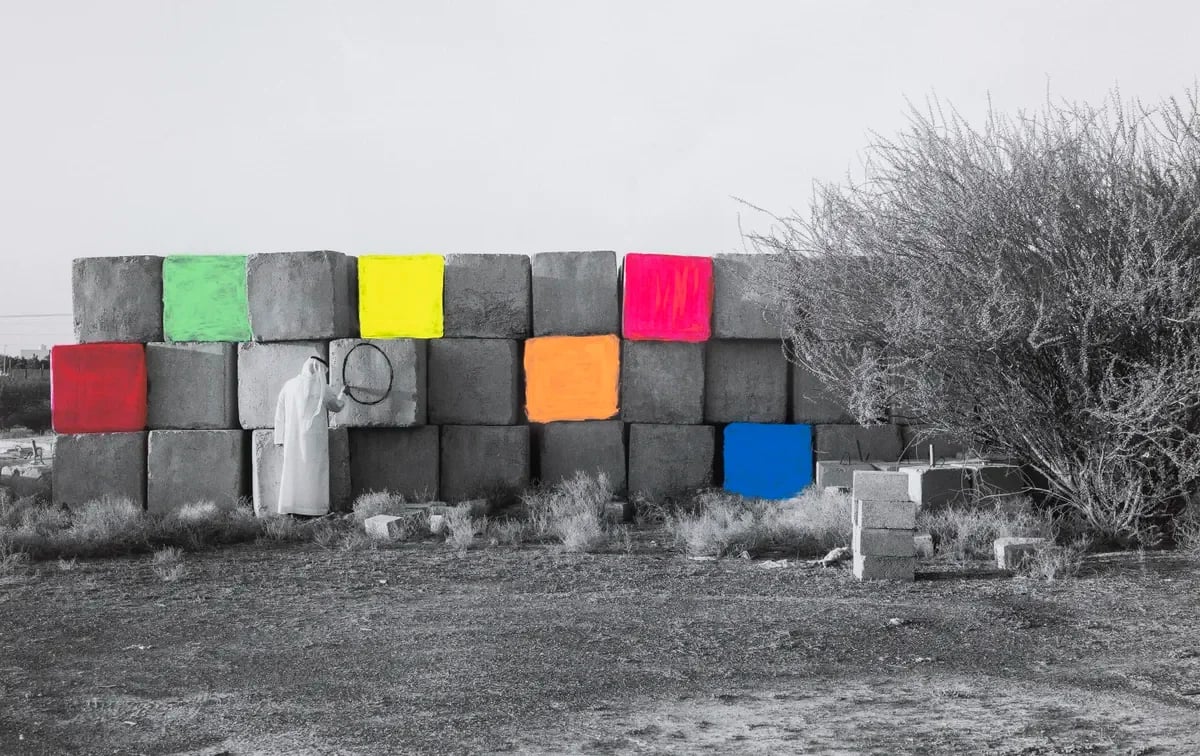 Silent Residues · Courtesy Iris Projects
Hashel Al Lamki
Born 1986 · Al Ain · Painting · Installation · Natural pigment
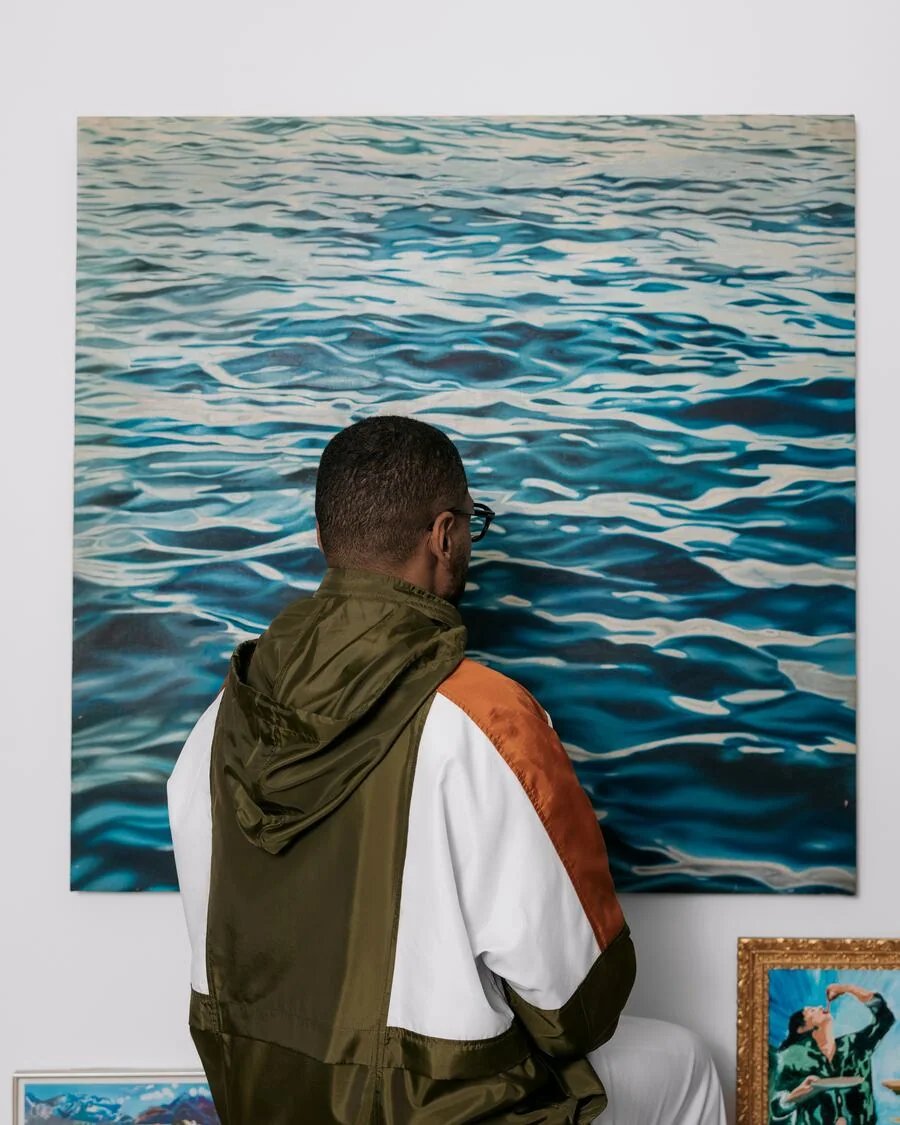 Studio portrait · Aqib Anwar
Al Lamki crushes local rocks and minerals into pigment, allowing place to enter the work materially. His paintings and installations trace the ecological and psychological pressure of urban growth.
His practice connects contemporary environmental urgency with the UAE conceptual tradition’s deep attention to landscape and found material.
Market position: rising regional demand, led by substantial paintings and materially complex installations.
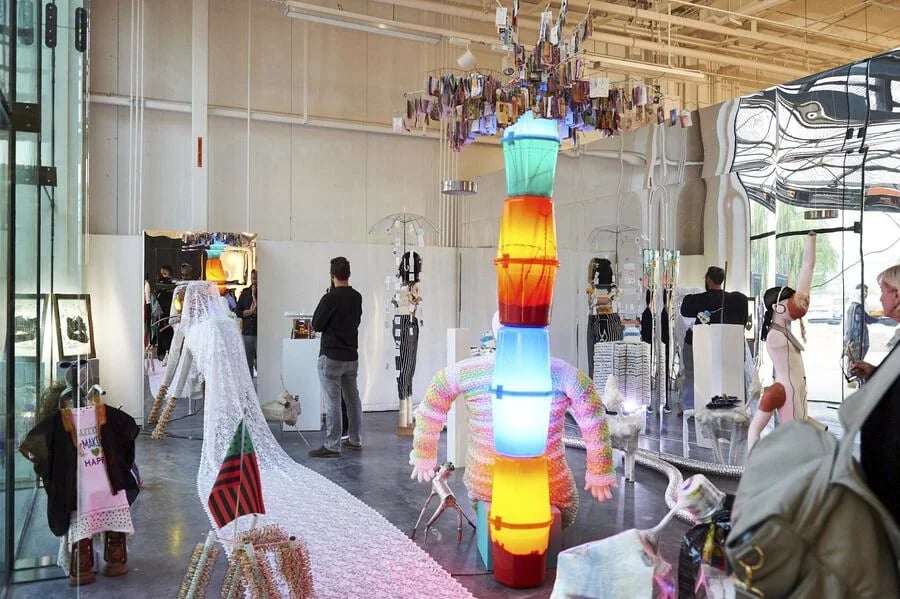 Installation view · Courtesy Warehouse421
Shaikha Al Mazrou
Born 1988 · Sharjah · Sculpture · Public art
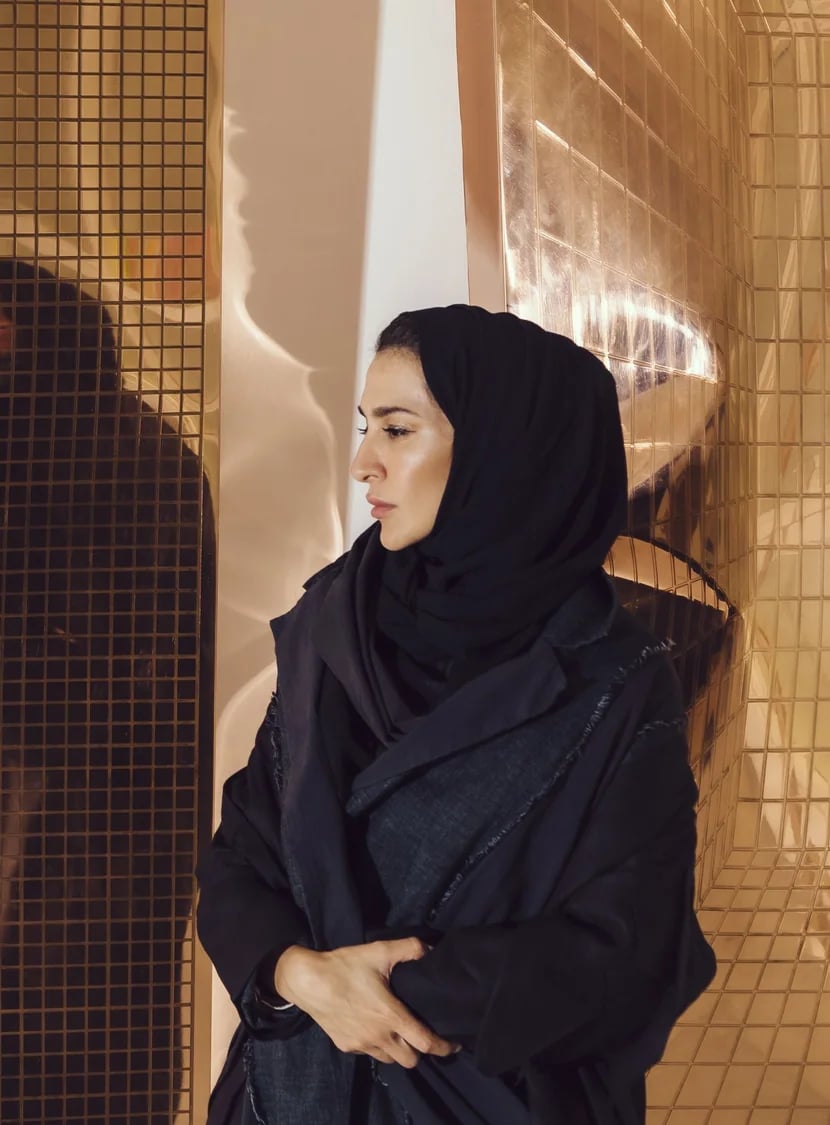 Portrait courtesy the artist and Lawrie Shabibi
Al Mazrou makes steel behave improbably. Wet-painted planes buckle like folded paper, scaffolding tubes balance with apparent weightlessness and rigid industrial surfaces become soft optical riddles.
One of the Gulf’s leading sculptors of her generation, she was selected as Abu Dhabi Art’s 2025 Visual Campaign Artist and has delivered major public commissions across the region.
Market position: a fast-maturing primary and secondary market, with strongest demand for signature folded-steel works.
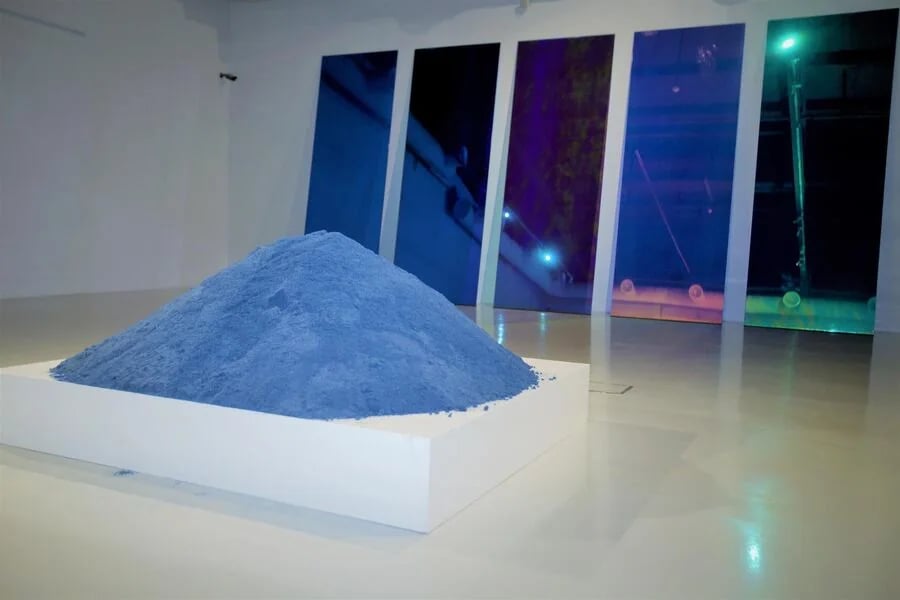 Rearranging the Riddle · Courtesy Maraya Art Centre
Alia Zaal
Born 1989 · Dubai · Painting · Curatorial practice
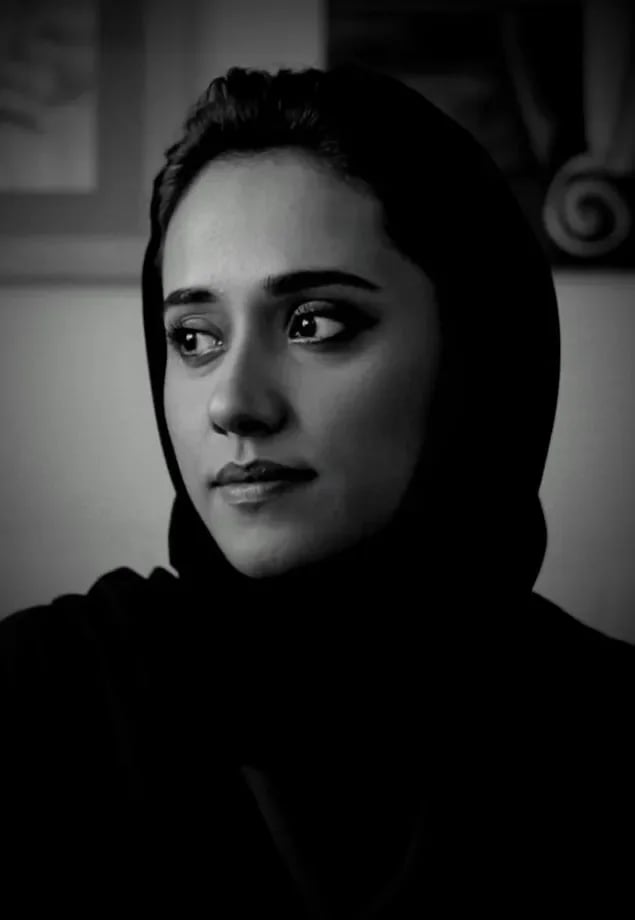 Portrait courtesy Hunna Art
Zaal studies how light reorganises the familiar. Ghaf trees, mangroves and cultivated gardens become atmospheric records of the UAE landscape, informed by her research into Impressionist colour and perception.
Her work offers an ecological counterpoint to urban narratives while her curatorial practice connects generations of artists across the region.
Market position: an emerging collector base supported by distinctive subject matter and increasing institutional visibility.
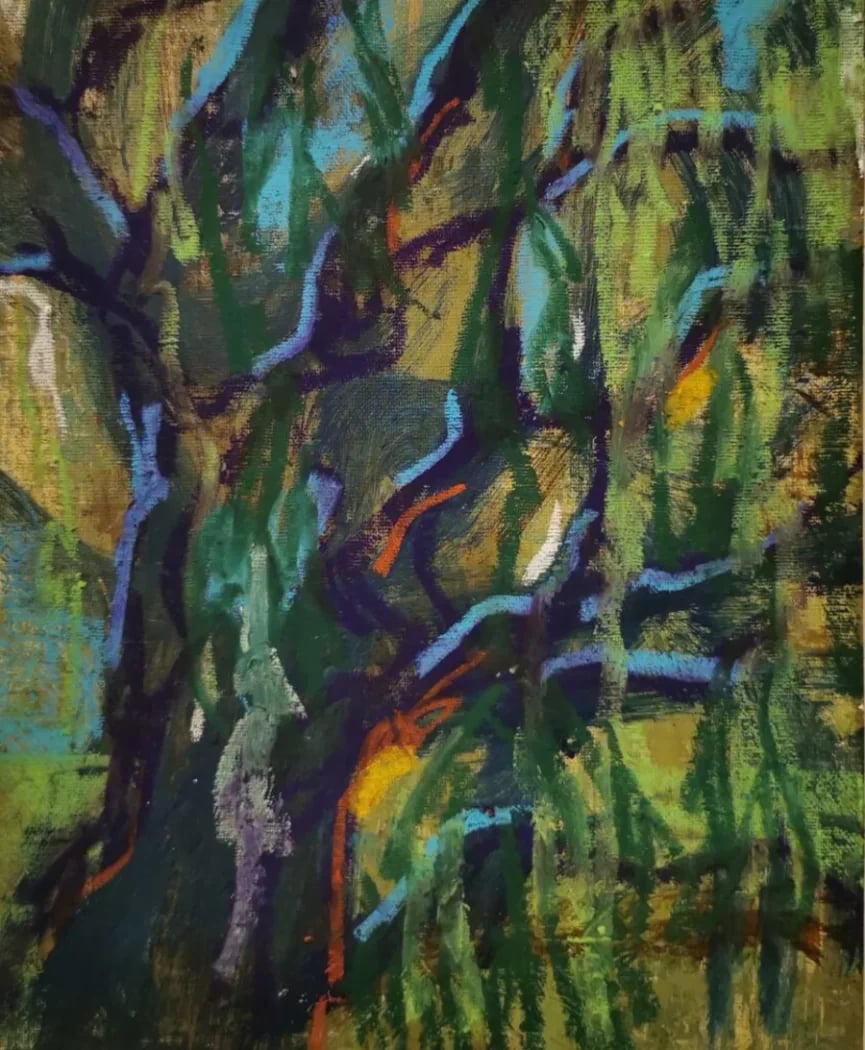 Impression of a garden at night (Ghaf) I, 2022
Maitha Abdalla
Born 1989 · Khor Fakkan · Abu Dhabi · Painting · Performance · Video
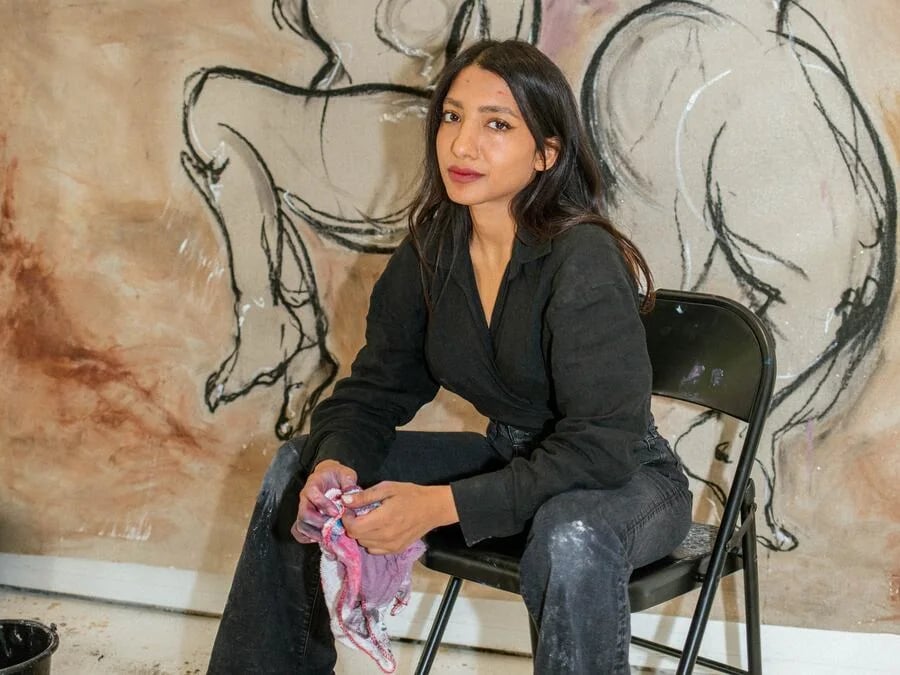 Studio portrait, 2022 · Courtesy Tabari Artspace
Abdalla stages psychological dramas through folkloric bodies, saturated colour and theatrical space. Her paintings and performances make private anxieties feel like scenes from a half-remembered Gulf fable.
As a co-founder of the artist-run Bait 15, she helped create an independent platform for experimentation in Abu Dhabi.
Market position: growing international visibility, with collector interest concentrated in major narrative paintings.
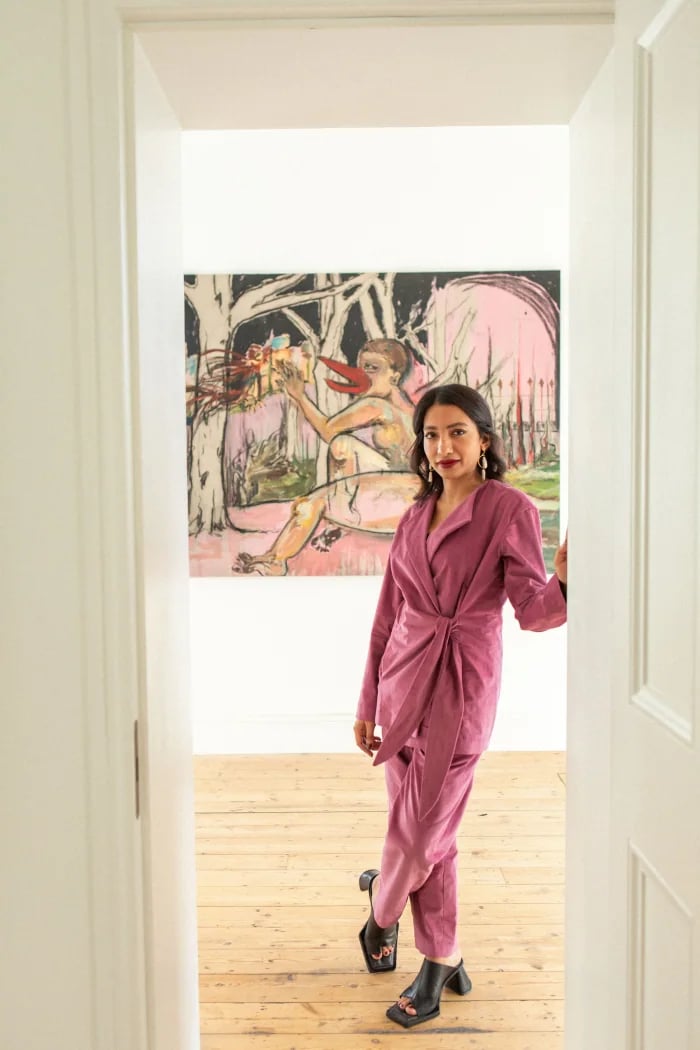 An Effort · Installation view at Cromwell Place
Farah Al Qasimi
Born 1991 · Dubai · New York · Photography · Film · Video
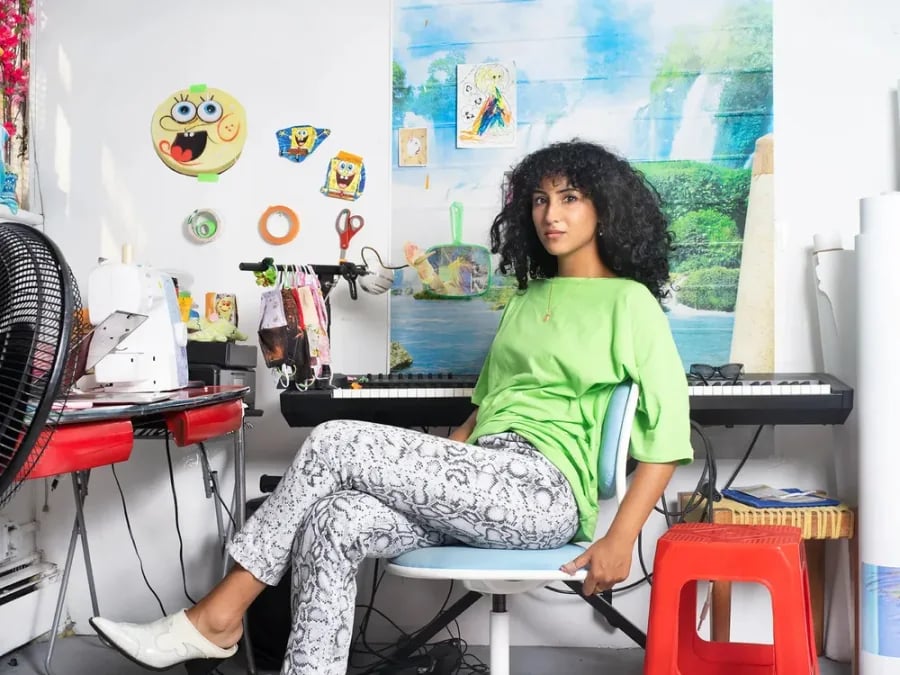 Studio portrait, 2020 · Photo by the artist
Al Qasimi’s densely patterned photographs move between staging and observation. Domestic interiors, beauty rituals and consumer surfaces reveal how gender, taste and postcolonial identity are performed across the Gulf and its diaspora.
Her work is held by major international museums, and her films and photographs have brought a distinctly Gulf visual intelligence into global contemporary art.
Market position: internationally established for her generation, spanning accessible editions and museum-scale multi-panel works.
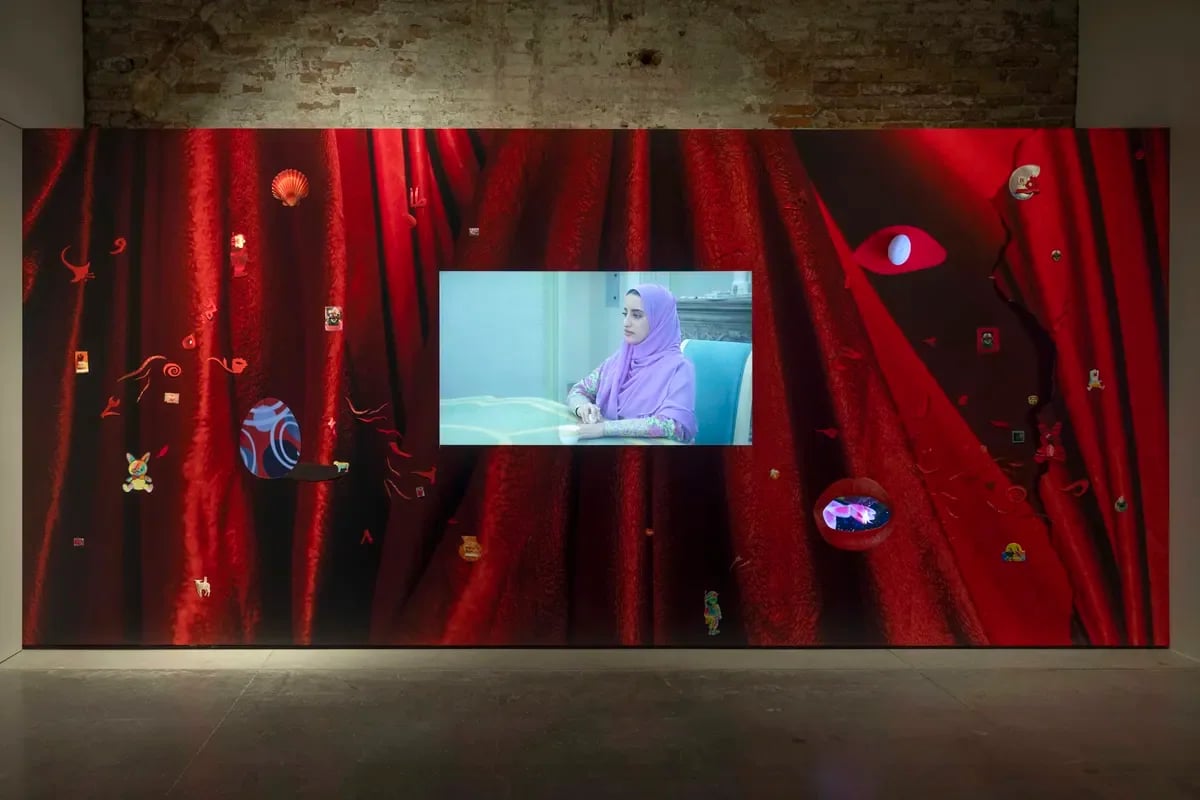 The Curse · Courtesy National Pavilion UAE, photo Ismail Noor
Mohamed Al Mazrouei
Born 1962 · United Arab Emirates · Painting · Poetry · Writing
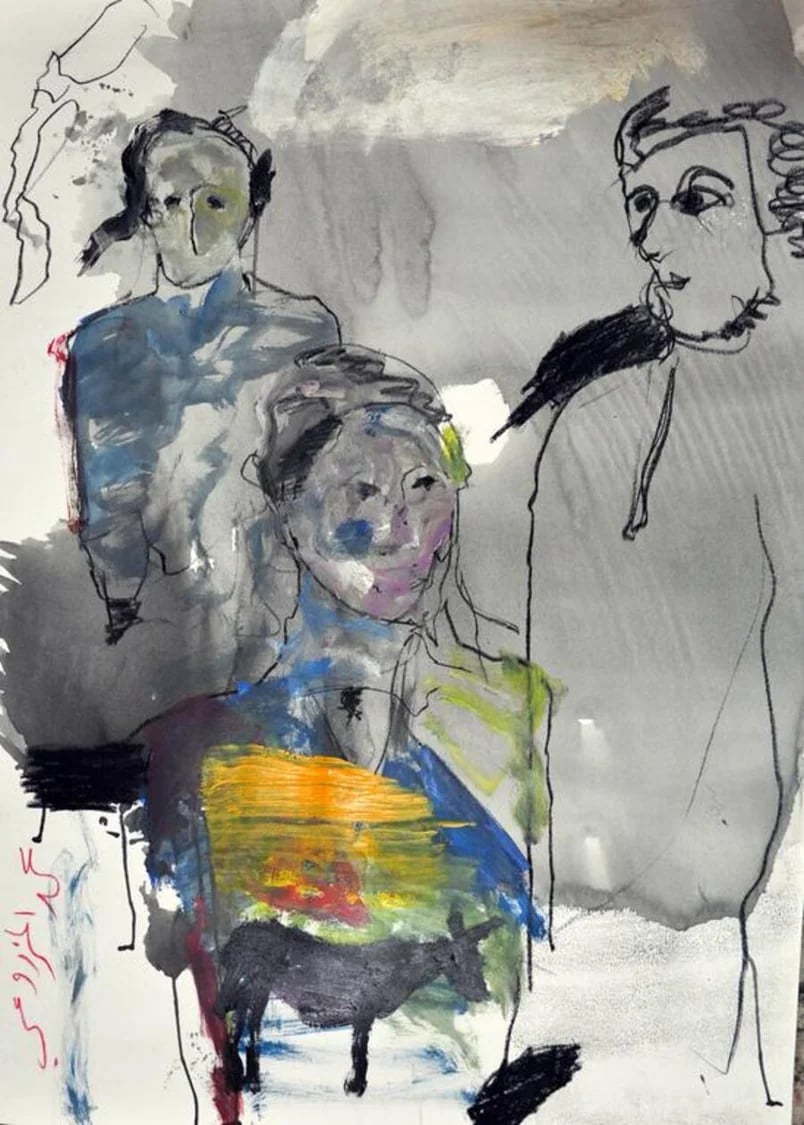 Portrait courtesy Mohamed Al Mazrouei and AB Gallery
Al Mazrouei’s paintings bring literary sensibility to distorted bodies, spare signs and psychologically charged colour. His work sits outside a single generation, linking early experimental circles with today’s more fluid cultural field.
An artist, poet and cultural writer, he has sustained an independent voice across visual and literary life in the Emirates.
Market position: selective regional representation, with value driven more by critical history and rarity than auction frequency.
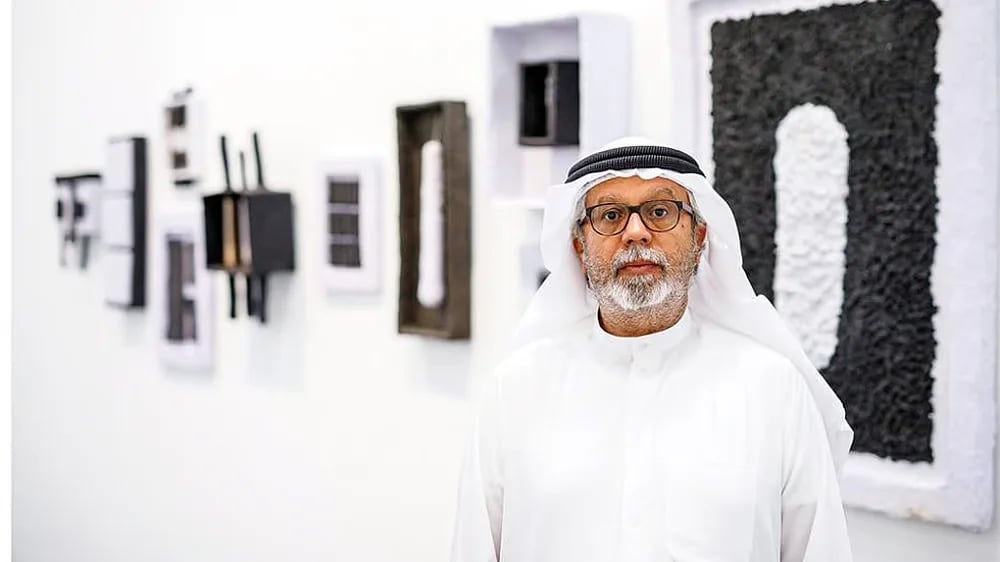 Artwork and studio view · Gulf News
Almaha Jaralla
Born 1996 · Abu Dhabi · Painting · Archival research
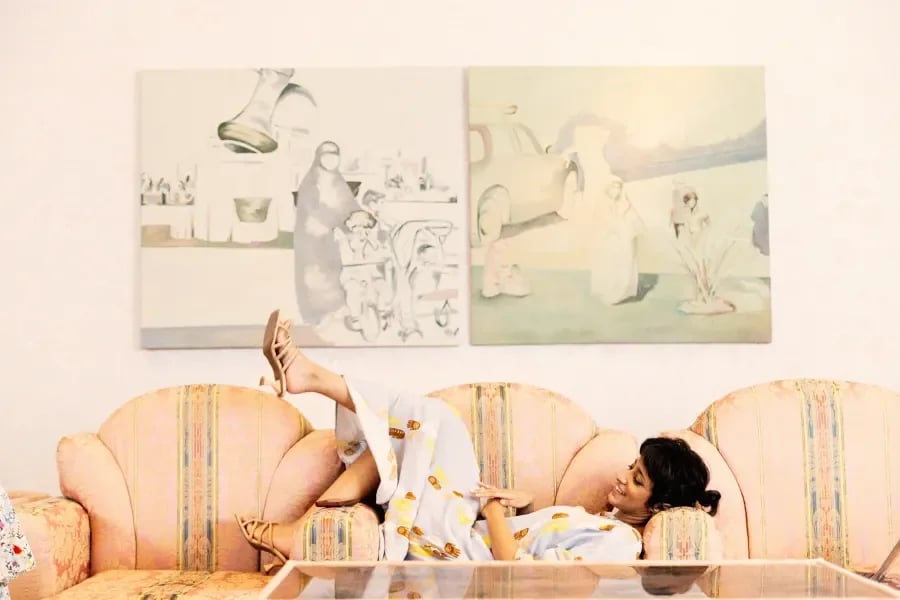 Portrait courtesy Tabari Artspace
Jaralla paints the architecture and social histories of Abu Dhabi through close research and personal memory. Her quiet scenes ask who gets to inhabit the image of a city, and which histories remain just outside the frame.
Her exhibitions have made questions of land, family and urban memory central to a new generation of Emirati painting.
Market position: emerging, with rapid institutional and curatorial recognition supporting a young primary market.
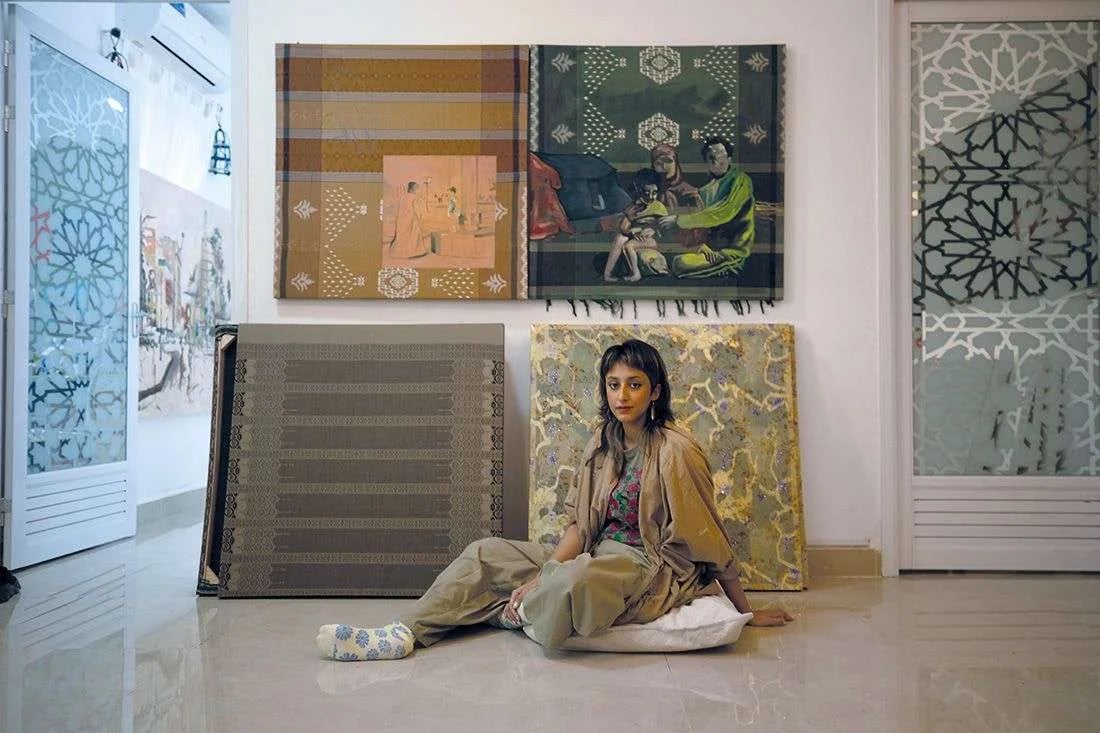 Seham · Courtesy the artist and Tabari Artspace
Sarah Almehairi
Born 1998 · Abu Dhabi · Painting · Textile · Paper
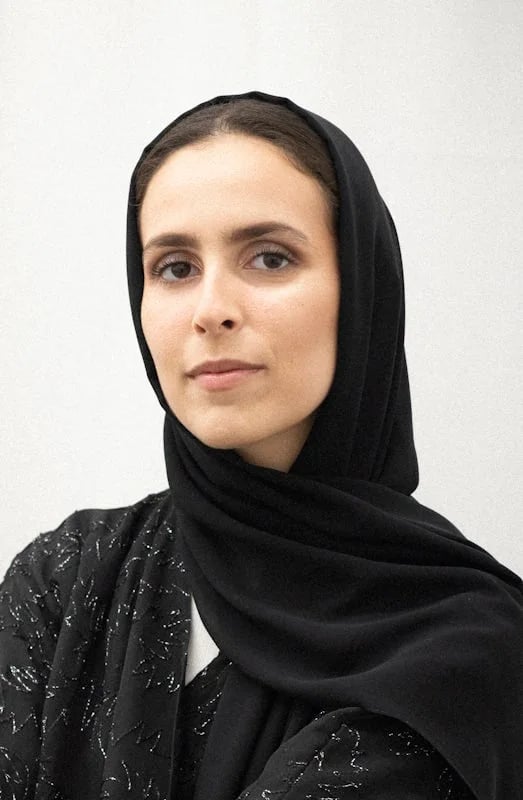 Portrait of Sarah Almehairi
Almehairi builds measured abstractions from geometric fragments, stitched surfaces and shifts in material density. Architecture is reduced to rhythm, edge and interval rather than depicted as a complete structure.
Her precise material language has established her among the UAE’s most closely watched emerging abstract artists.
Market position: early but well supported by gallery representation, institutional programmes and a coherent body of work.
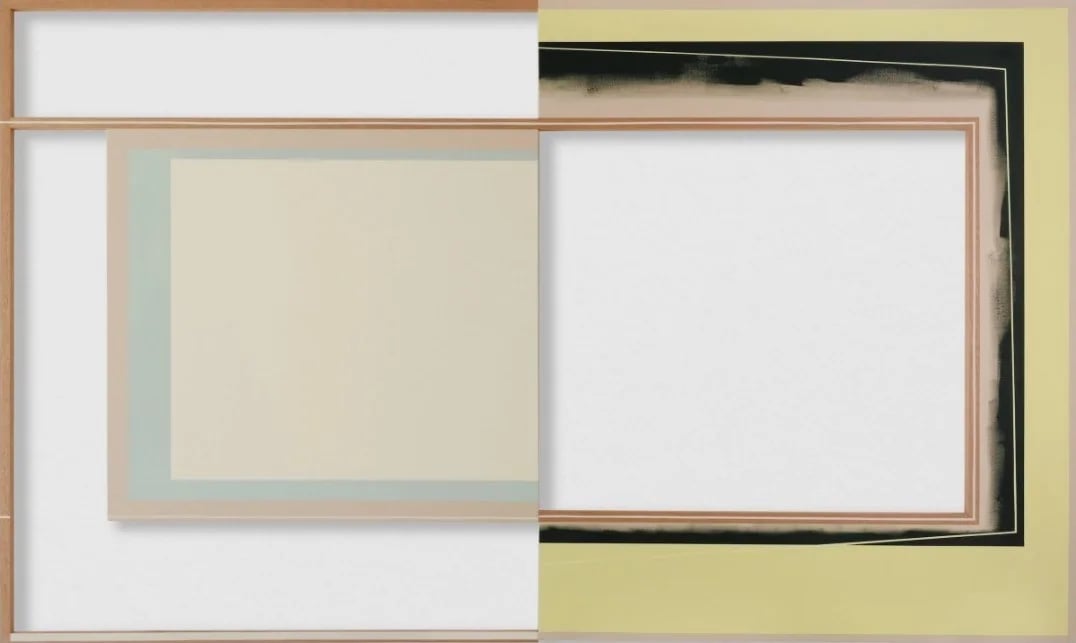 Off Centered Fraction, 2024 · Courtesy the artist
IV · Beyond the gallery · Present
A symphonic language for the oud
The UAE’s artistic history is not confined to objects. Composition, performance and preservation carry cultural memory through sound and collective experience.
Faisal Al Saari
Contemporary · United Arab Emirates · Composition · Oud · Orchestration
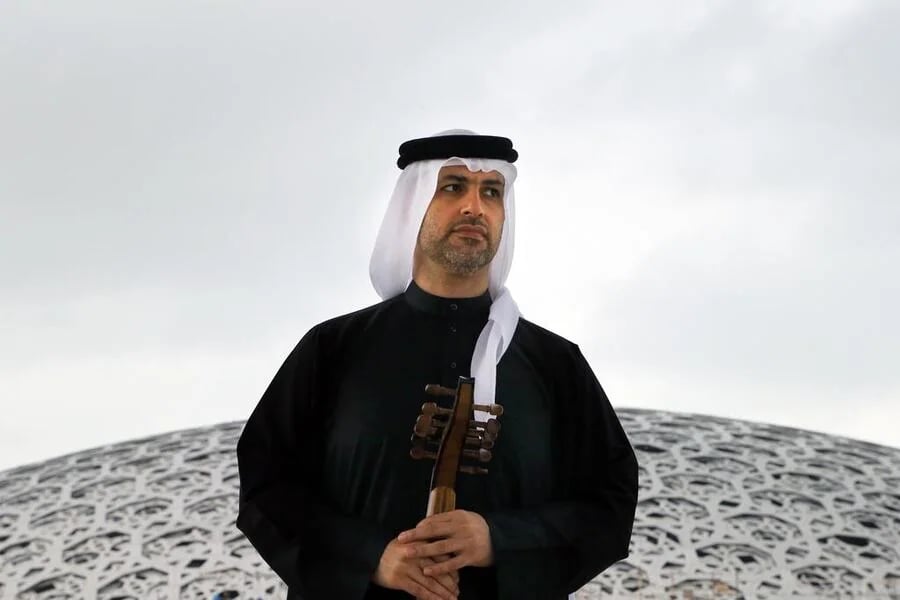 Portrait courtesy Abu Dhabi Tourism & Culture Authority
Al Saari brings the oud into conversation with the full symphonic orchestra, combining Arabic maqam and Gulf rhythm with Western orchestration. His work treats musical heritage as a living structure capable of expansion.
As a composer, performer and educator, he has helped place Khaleeji musical language on international concert stages while preserving instrumental knowledge for the next generation.
Professional model: commissions, institutional performances and orchestral scoring rather than the object-based gallery market.
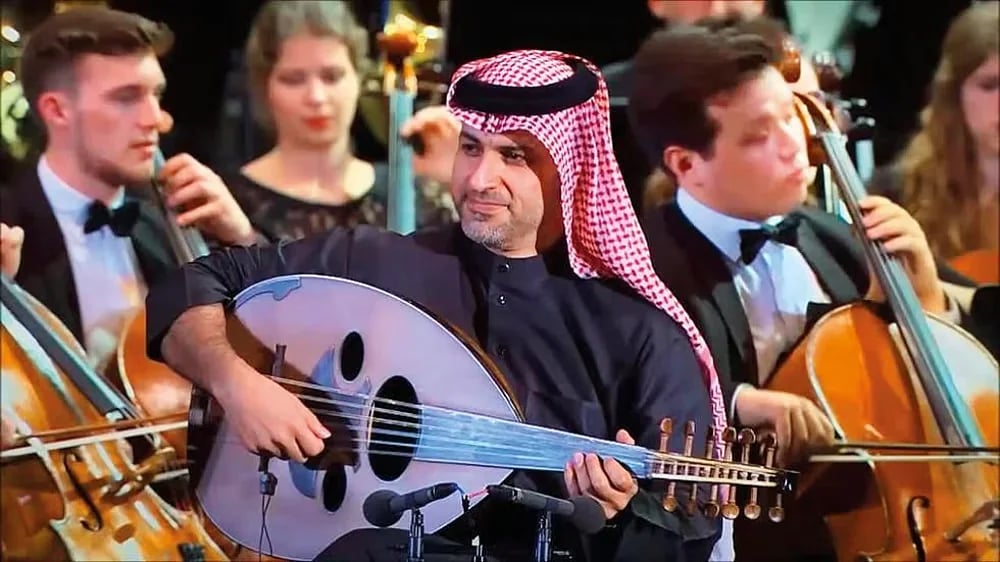 In rehearsal with the Gustav Mahler Youth Orchestra · Louvre Abu Dhabi
Recognition now moves on two connected tracks
Modern masters and conceptual pioneers form the established tier: scarce historic work, museum representation and an active international secondary market reinforce one another. Their prices are not simply a function of size; period, provenance and institutional history are decisive.
The younger market is driven more strongly by gallery representation, public commissions, biennials and museum acquisition. Shaikha Al Mazrou, Farah Al Qasimi and Mohamed Ahmed Ibrahim demonstrate how quickly institutional visibility can expand a regional practice into a global one.
Market observations in this article are directional, not valuations. Any price claim should be tied to a dated auction result or current gallery source.
The story remains open
Emirati art has never been a choice between heritage and experimentation. Its most consequential figures hold both at once—using new forms to ask what should be remembered, what is changing, and who gets to describe the place they call home.